iPhone 4: a Welcome and a Warning

Welcome The hooplah that surrounds the release of a new Apple product is enough to make many otherwise calm and balanced adults froth and jigger. That some froth with excited happiness and others with outraged contempt is almost irrelevant, it is the intensity of the response that is so fascinating. For the angry frothers all are fair game for their fury – the newspapers, the blogosphere, the BBC and most certainly people like me for acting, in their eyes, as slavish Apple PR operatives. Why should these iPads and iPhones be front page news when, the frothers froth, there are plenty of other manufacturers out there making products that are as good, if not better, for less money? And isn’t there something creepy about Apple’s cultiness and the closed ecosystem of their apps and stores? The anti-Applers see pretension and folly everywhere and they want the world to know it. The enthusiastic frothers don’t really mind, they just want to get their hands on what they perceive as hugely desirable objects that make them happy. The two sides will never agree, the whole thing has become an ideological stand-off: the anti-Apple side has too much pride invested in their point of view to be able to unbend, while Apple lovers have too much money invested in their toys to back down. It is an absorbing phenomenon and one which seems to get hotter every week.

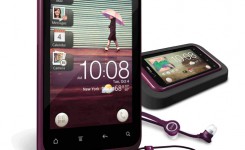
I almost always go out with an iPhone in one pocket, a BlackBerry in another and an Android device in a third. But then I am peculiar. If I had to keep only one, yes, I confess I would choose the iPhone, but I could cope happily if I were left with just a BlackBerry Bold or an HTC Desire. At least so I would have said until last week when Apple gave me an iPhone 4 to play with. For just as the frenzy of iPad launch has subsided (3 million sold in 8 weeks) it is now time for Apple haters to have a new device waved in their angry faces and time for Apple lovers to get verbally bitch-slapped for falling once more for Steve Jobs’s huckstering blandishments. iPhone 4 is here. It is only a year since many will have taken advantage of incentives to upgrade from iPhone 3G to iPhone 3GS and their deals may still be active, denying them the chance to leap to the newest phone without eye-watering financial penalties. Much as 3GS was released simultaneously with OS 3.0, so iPhone 4 arrives with iOS (as all Apple mobile device operating systems will now be designated) 4.0, which will be able to bring some, but not all of its new functions and features to older phones (but not the iPhone 2G). The phone will be available unlocked here in the United Kingdom, so your existing SIM (so long as it is cut down to the new mini-SIM shape) will work without having to jailbreak and unlock.

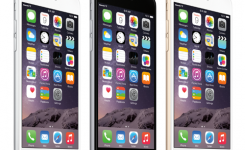
iPhone 4

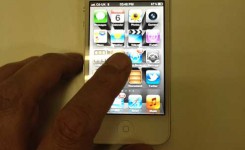
iPhone 4 is an object of rare beauty (even when badly photographed using an iPhone 3GS). Noticeably slimmer but a trifle heavier than predecessors, its new heft only adds to the profound feeling of quality and precision that the device exudes. Sharper edged, it is girt by a stainless steel band which cleverly houses all the antennas required by a modern smartphone. Jobs himself made a comparison between iPhone 4 and a classic Leica. With this device in my hand I feel that I am holding its designer Jonathan Ive’s personal prototype, hand-machined as a proof-of-concept model. Ive is surely one of the most influential and gifted designers Britain has ever produced and iPhone 4 may well be his masterpiece.

Apple have produced, and third parties will doubtless emulate and improve, rubberised wrap-around belts called Bumpers that easily slip round the edges of the handset affording what will probably be regarded as much needed protection. They come in all kinds of colours and give the device great resilience (I saw an Apple executive gleefully hurling his bumpered iPhone 4 across the room). Bumpers may diminish the perfect lines of the profile, but it’s a compromise many will make, as the sharp edges are bound to make one a little nervous about chipping and denting.

This blog was posted in General, Guardian column and Techblog

No Comment…

Wherever and however you are reading this, welcome. It might be that you are, like me, the kind of early adopting sillyhead who has already got their hands on an iPad and, having naturally rushed to download FryPaper the App, is now reading this on your new slidey-smooth device. Perhaps you have an Android or iPhone and are making use of Wordpress’s rather superior on-the-fly mobile formatting. It may be that you are quite happily reading these words the traditional way on the stephenfry.com website. You may be one of a large-ish chorus who wishes I would stop being so lazy and prevaricating and return to the habit of recording blessays and blogs in the form of a podgram as I used to do in the good old days.

  READ ALL

Apple’s iPad: The Mothership Prepares for Launch

On the Mother Ship. a self-confessed Apple fanboy gets finger time with the ipad – and face time with Steve Jobs

Article “Apple’s iPad: The Mothership Prepares for Launch” published on Thursday 1st April 2010 in TIME Magazine” – Time Magazine headline.

It is a gorgeous spring day when I arrive at the coolest address in the universe: 1 infinite Loop, Cupertino, Calif., where apple has been headquartered since 1993. The campus, for such they call it, is enormous yet not big enough to contain apple’s current rate of expansion. An additional site is being designed and built. after stocking up on “I visited the mother- ship” t-shirts at the company store (we fanboys are pathetic, I readily confess), i am shown around the canteen, lawns and public spaces. It is right to call this a campus, for everyone looks and dresses like a student. I should imagine the only people ever caught wearing suits here have been visiting politicians.

I am here at apple’s invitation to try out the iPad, and later in my visit I will spend an hour with the company’s boss, Steve Jobs—the first time I’ve ever spent any real time with him.

Read this article at TIME.com

This blog was posted in Techblog Related topics: , , ,

Digital Devicement: Part Three – BlackBerry Picking Time

It’s only mail and text, but I like it, like it

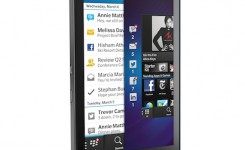
I remember attending a Rolling Stones concert at the Dodger Stadium, Los Angeles last year. When it was apparent that the final encore had been given and that the event was over, the audience stood to leave and the darkness was punctuated by the twinkling of ten thousand BlackBerries: the Rolling Stones generation checking their inboxes. No cigarette lighters held up in the air to honour the band (there probably wasn’t one smoker in a thousand at the venue), just handsets held up to their own faces to honour the bandwidth. The moment seemed to distill some truth about our culture that simultaneously amused, depressed and delighted me. Go, as they say, figure.

The Canadian company Research In Motion introduced its first BlackBerry, a duplex pager, ten years ago. Since then RIM has established itself and its device as one of the great success stories of the digital age. BlackBerry is a kind of cult – a verb, a metonym, a synecdoche for corporate life on the move.

Under the RIM

For those of you unconnected with business, the way Blackberryists interface with their phones may be unfamiliar. Typically he or she will have been given the handset by their employer. This is not an act of generosity. The device is a kind of leash, a digital ball and chain not far from the electronic tag that convicts on parole are forced to wear. The email and calendar accounts are controlled by the company, via BlackBerry Enterprise Server connections. Each handset can be zapped, nixed and deactivated by the corporate IT people whose hands are ever hovering over the kill switch, awaiting the command from the Fifth Floor. Or so it must seem to some employees. Like the bonds of marriage, the connection can be seen as a welcome tie that binds you with ribbons of gold to the company you love, or as a set of shackles that confine you for ever in a hateful prison from which there is no escape.

  READ ALL

This blog was posted in Techblog Related topics: , ,

Digital Devicement: Part Two – Magical Heroes

Android

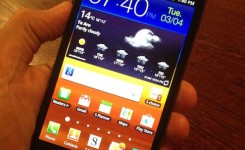
Android is the name given to an open source mobile operating system developed by Google and the Open Handset Alliance and released a year ago. In December 2008 I reviewed here the HTC G1, the first android phone. I concluded:

One can bet that the G2 and G3 will better bear the luscious fruit of Open Source development before very long. Meanwhile, the G1 stands as a reasonably priced and impressive first shot from HTC and Android. The whole system can only improve and when it does it will truly give the iPhone a run for its money. Especially if Apple stays as tightly closed as they are now.

Well Apple haven’t shown much sign of opening up. Each week seems to bring a new story of some indignant developer complaining at Apple’s lordly refusal to allow their new app shelf-space in the store. Even the mighty Google have been whingeing. On the other hand Apple have not stood still in the field of iPhone development either. So have Android and HTC managed to close the gap with the Hero and the Magic?

  READ ALL

This blog was posted in Techblog Related topics: ,

Advertisement

Join CLUBFRY and make friends

Book for Stephen Fry Live!

The Dongle of Donald Trefusis

Dongle of Donald Trefusis

The new audio series of Professor Donald Trefusis.